
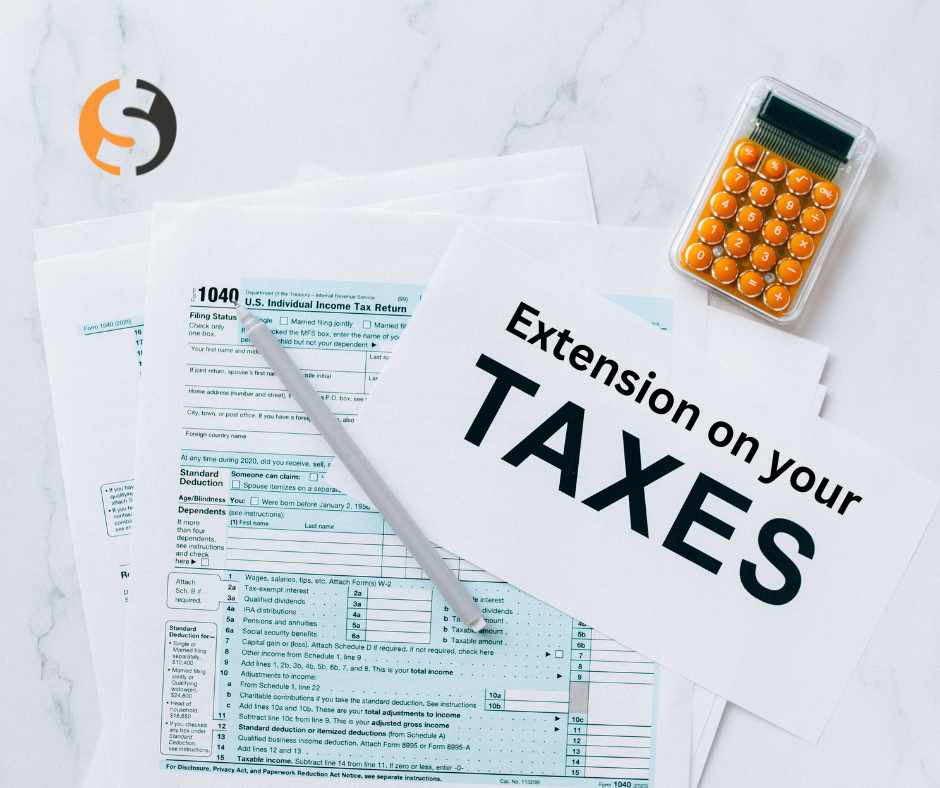
What is a Tax Extension

by | Mar 16, 2023 | Accounting, Government, Information Technology, Internal Revenue Service

As many are well aware, the federal income tax filing due date for individuals, for the 2022 tax year, is approaching fast. Due date is Tuesday, April 18, 2023.

If you feel you need more time, there’s no need to worry. Filing a tax extension is an option, and truthfully, it’s not nearly as frightening as it may sound.

What Is a Tax Extension? 

A tax extension simply gives you extra time to file your taxes, 6 extra months to be exact. If you request an extension, it will be granted automatically, but the extension form 4868 must be filed no later than midnight on April 18th .

Benefits to Filing a Tax Extension

  • Believe it or not, filing a tax extension is typically free!
  • The extension provides you, and/or your accountant, with more time to thoroughly prepare and accurately file your returns with less pressure.
  • It can help you avoid the tax filing penalty that you may be subject to.

IMPORTANT!

The most important thing to keep in mind when filing a tax extension is that, filing an extension does NOT give you more time to pay taxes that you owe! If you owe taxes, you are still 100% liable to pay the amount you owe by the tax deadline on April 18th of this year.

Taxpayers who file an extension will have until October 16th to complete their return, but they must pay what they owe by April 18th. On that day, interest and penalties will start to apply.

Not Sure How Much You Owe?

There’s a convenient online tool to help you figure this out. The Income Tax Calculator estimates the refund or potential owed amount on a federal tax return, or you can always consult your tax professional.

Do You Owe, but Don’t Have the Money?

If you know you owe, but don’t have the money – this is important – STILL FILE YOUR RETURN!

Even if you can’t pay anything toward your taxes, you should still file an extension. The penalty can be much higher for not filing your return than it is for not paying your taxes owed.

Deadline for Filing a Tax Extension

The tax extension deadline is always the same as Tax Day. For individual returns, the deadline is April 18th of this year. You will not be able to file an extension after the 18th of April 2023.

Would You like Senter, CPA to File a Tax Extension for You?

If you’re planning to have Senter, CPA prepare your tax returns, and are interested in filing a tax extension, we would be more than happy to file the extension for you.

Here’s What We Will Need from You

  • Your Contact Information
  • Your Social Security Number
  • Your last 2 Tax Returns (if you are a new client)
  • Your 2022 Tax Documents
  • Do you anticipate having to owe?
  • How much?
  • How much do you want to pay with your extension?
  • We highly recommend overpaying, if you’re able to, and then choosing to either receive the extra money back with your return or apply it to next year.

Once we have the requested information from you, we will still do our best to file your return by the April 18, 2023 deadline. But, in the event that we are unable to, then we will proceed with filing the extension. At that time, you will need to submit your payment with the extension, if you owe.


 

Always remember, Senter, CPA is here for you if you need any assistance.

Don't hesitate to give us a call at 248-934-0550, or contact us below.

Common Tax Documentation for 2025 Tax Season

Getting your tax documents organized for your preparer can feel overwhelming—but you don’t have to do it alone. One of the most common questions we hear is, “What documents do I need for my individual tax return?”

2025 Senter, CPA Year in Review

Reflecting on 2025, Senter CPA has experienced significant growth and success, both personally and professionally. As we roll into 2026, we’re heading into our ninth year as a firm. That’s wild. It honestly feels like just yesterday that we unlocked the doors on January 1, 2018.

URGENT: New Electronic Payment Requirements

Tax season is getting a serious tech upgrade.

New Schedule C Excel Worksheet For 2025

If you file Schedule C as a sole proprietor or single-member LLC, you already know how detailed the IRS can be. The form requires a thorough breakdown of your business income and expenses, leaving little room for guesswork. Schedule C is the primary IRS form used to report your business’s profit or loss and completing it accurately is essential for both compliance and tax planning.

New Schedule E Excel Worksheet For 2025

If you report rental income on Schedule E, you already know the IRS wants your numbers broken out by category and by property. Schedule E is the main IRS form used to report rental real estate income and expenses on your personal return, and clean detail makes prep faster and cuts down on follow-ups.

Help Us Keep Spreading the Senter CPA Magic!

First off—thank you for being part of the Senter, CPA, P.C. family! Whether we helped untangle your taxes, guided your business through accounting complexities, or simply answered that one stubborn finance question that was bugging you, we hope we’ve made your financial life a little easier (and maybe even a little brighter!). Now, we’re turning to you—not for more numbers or forms—but for just a few kind words.

Preparing for 2025: Senter CPA Explains Key Tax Law Changes Affecting Social Security

Recent tax legislation has introduced changes that may impact how Social Security benefits are taxed—especially for seniors with lower to moderate incomes. While the core rules around taxation of Social Security remain in place, new deductions and adjustments could offer relief for many retirees.

1099 Season Is Coming – Don’t Wait Until Last Minute!

It’s almost that time of year again — 1099 season! Before you start panicking and digging through piles of receipts, let’s go over a few quick reminders to make sure your 1099s are accurate and filed on time.

Key Tax Changes for 2025: What Small Business Owners Need to Know

Some big tax updates are coming in 2025 that can help small and mid-sized businesses save money—especially when it comes to buying equipment, investing in growth, and planning for taxes. Here’s what you need to know:

Should You Still Itemize in 2025? Understanding the New Deduction Rules

The new tax law—officially known as the One Big Beautiful Bill Act (OBBBA)—brings several important updates starting in 2025. One of the biggest changes? A significantly larger standard deduction, which could lower your tax bill.

But should you still consider itemizing your deductions? Let’s break it down.