Traditional vs. Roth IRAs

by | Feb 13, 2024 | Tax

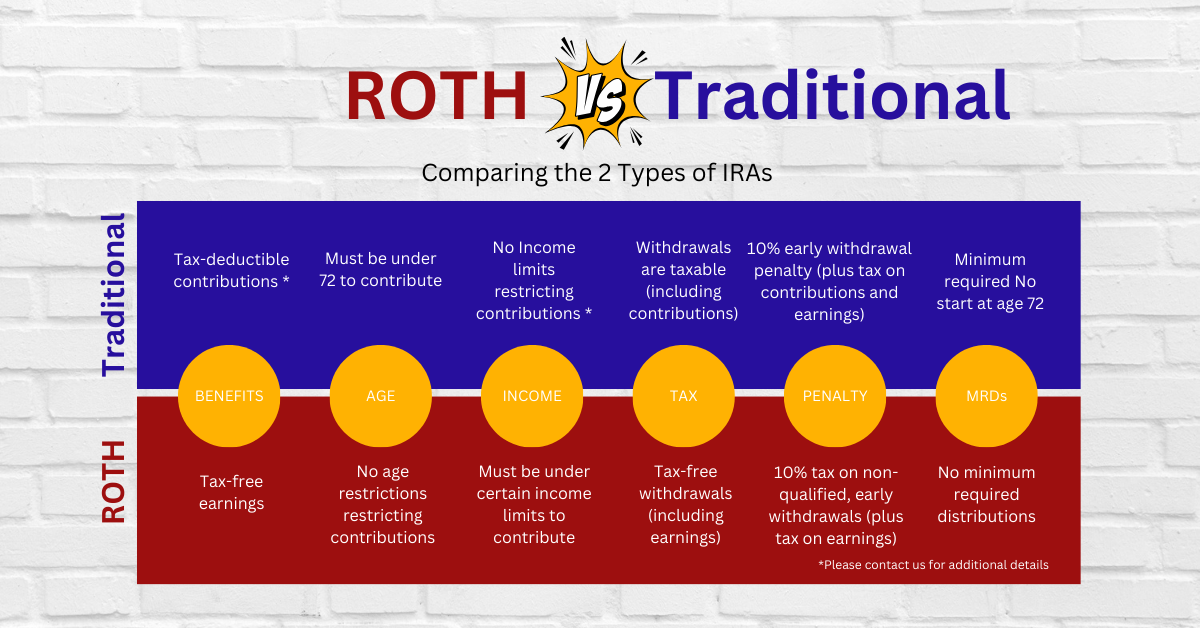
Saving for retirement can be a daunting task. Here, at Senter CPA, we can help you make some of those retirement decisions. One of those being the decision to put money into a Traditional retirement account or a Roth account. Everyone has a different tax situation from year to year so there is no correct answer to which one is better.

Traditional retirement is put into your account before you pay taxes on it. This helps lower your taxes due in the current year and allows your account to make a higher contribution. The negative of this type of account is that you will have to pay taxes on it when you pull the money out of the account. Traditional retirement accounts are also subject to RMD’s (required minimum distributions). This is a required distribution that starts when you turn 72.

Roth accounts have their contributions added after tax. This means there is no tax benefit in the current year, but the accounts will not be taxed again if you make qualified distributions. These accounts are not subject to RMD’s because they have already been taxed. So, the taxes are paid up front and the account grows tax free.

Now that you know the differences in the accounts, we will discuss some of the strategy applied to deciding. You will want to be taxed in the lowest tax brackets possible between the accounts. This means that if you are just starting your career and are in a lower tax bracket it could be a good time to contribute to a Roth account because you can get it into the account at a relatively lower tax rate. On the other hand, if you are having an amazing year and got raises and bonuses it might be a good year to contribute to a traditional account and have the tax benefit in the current year. This will allow you to pay taxes on that contribution later when you take a distribution when you are older and pssibly have a lower tax rate.

You have to look at these things from year to year. It’s not just a one-time thing. You might switch back and forth between the two or you might not be so certain about the future and want to split contributions into both so that you may have some flexibility when it comes to retirement planning. Other things to consider when thinking about retirement planning are that there are income limits to contributing to a Roth plan but there are ways to roll traditional accounts into Roths. If you have further questions about these, you can contact us or your financial advisors.

Always remember, Senter, CPA is here for you if you need any assistance.

Don't hesitate to give us a call at 248-934-0550, or contact us below.

How to Document Charitable Donations for Tax Deductions

Accurate documentation is essential when claiming charitable contributions on your tax return. The IRS requires specific records depending on the type and value of your donations. Maintaining proper records ensures your contributions are deductible and helps you avoid issues if your return is ever reviewed.

How to make Federal & State Income Tax Payments (update January 2026)

Paying federal and Michigan income taxes is pretty straightforward and are now required to be paid online.

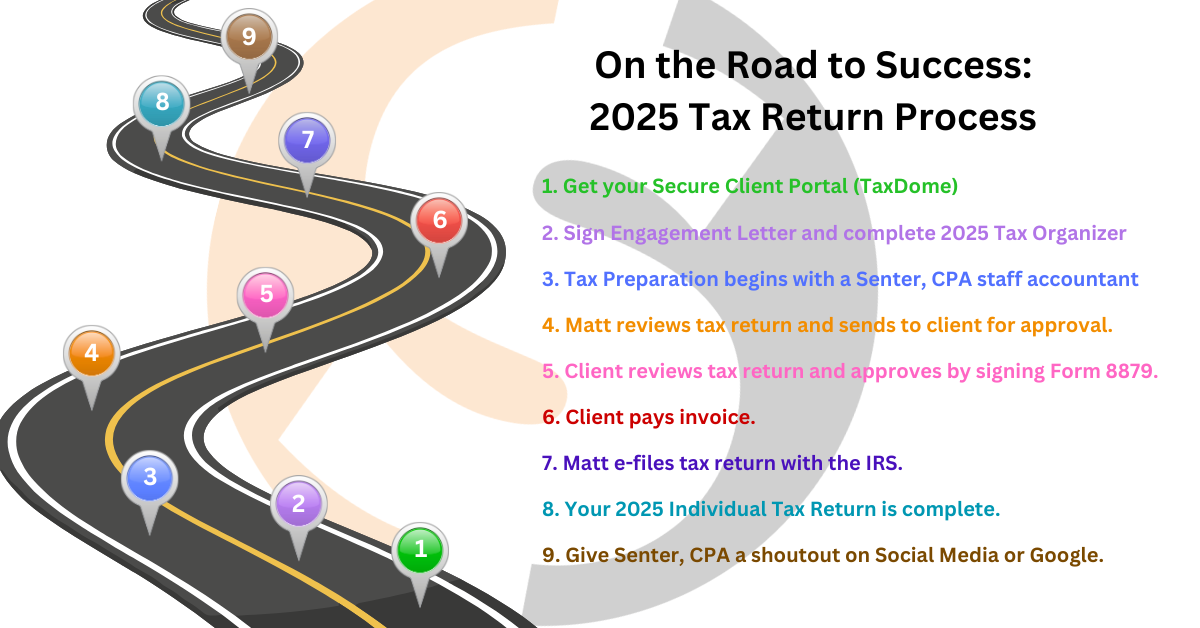
2025 Individual Tax Return Process

At Senter, CPA, our goal is to make your tax preparation experience as seamless and efficient as possible.

What are QCD’s?

Qualified Charitable Distributions (QCDs) are a tax-efficient way for eligible IRA owners to support charitable organizations while managing taxable income. Individuals who are age 70½ or older may donate up to $108,000 in 2025 directly from a traditional IRA to a qualified charity. When structured properly, a QCD is excluded from taxable income, may satisfy Required Minimum Distribution (RMD) requirements, and can help reduce overall tax liability.

Common Tax Documentation for 2025 Tax Season

Getting your tax documents organized for your preparer can feel overwhelming—but you don’t have to do it alone. One of the most common questions we hear is, “What documents do I need for my individual tax return?”

2025 Senter, CPA Year in Review

Reflecting on 2025, Senter CPA has experienced significant growth and success, both personally and professionally. As we roll into 2026, we’re heading into our ninth year as a firm. That’s wild. It honestly feels like just yesterday that we unlocked the doors on January 1, 2018.

URGENT: New Electronic Payment Requirements

Tax season is getting a serious tech upgrade.

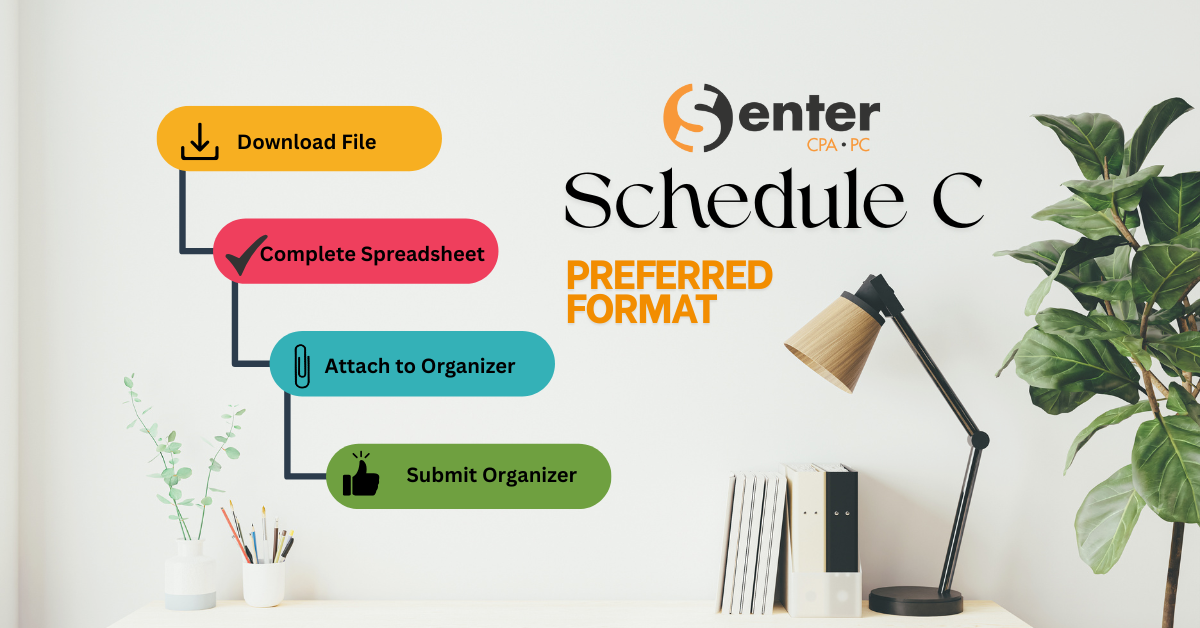
New Schedule C Excel Worksheet For 2025

If you file Schedule C as a sole proprietor or single-member LLC, you already know how detailed the IRS can be. The form requires a thorough breakdown of your business income and expenses, leaving little room for guesswork. Schedule C is the primary IRS form used to report your business’s profit or loss and completing it accurately is essential for both compliance and tax planning.

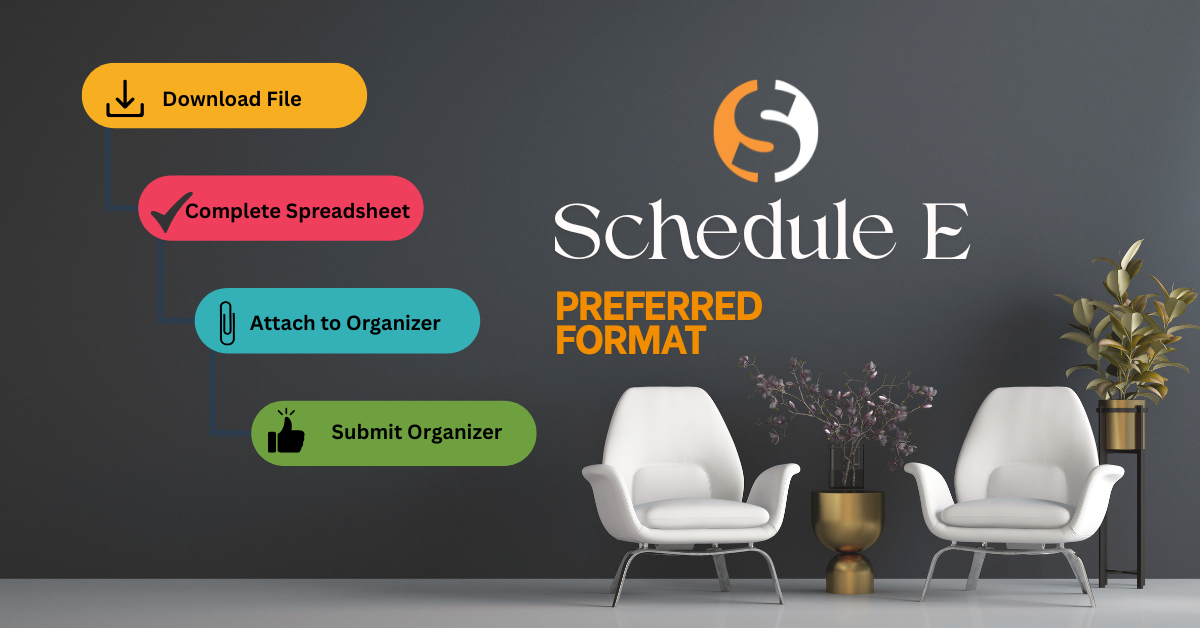
New Schedule E Excel Worksheet For 2025

If you report rental income on Schedule E, you already know the IRS wants your numbers broken out by category and by property. Schedule E is the main IRS form used to report rental real estate income and expenses on your personal return, and clean detail makes prep faster and cuts down on follow-ups.

Help Us Keep Spreading the Senter CPA Magic!

First off—thank you for being part of the Senter, CPA, P.C. family! Whether we helped untangle your taxes, guided your business through accounting complexities, or simply answered that one stubborn finance question that was bugging you, we hope we’ve made your financial life a little easier (and maybe even a little brighter!). Now, we’re turning to you—not for more numbers or forms—but for just a few kind words.